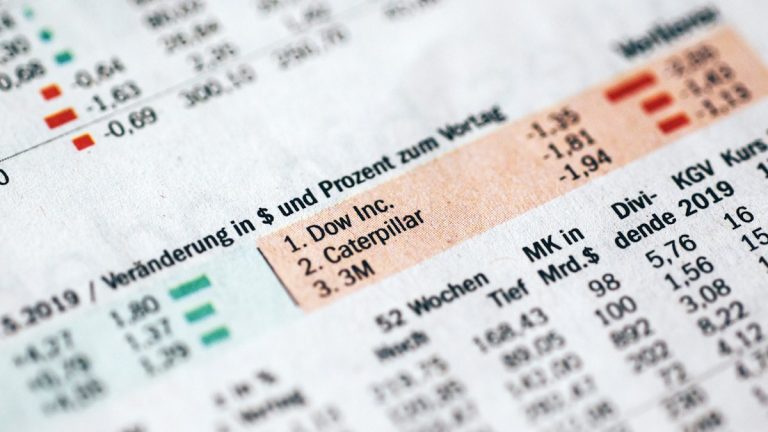
Charles Schwab pioneered zero-commission trading in the United States, sparking a global disruption that fundamentally changed how retail investors participate in financial markets. In Britain, this philosophy now extends beyond public equities into early-stage venture funding, where innovative platforms eliminate high percentage-based fees to connect angel investors directly with high-growth businesses.
The Zero-Fee Revolution: Transforming UK Wealth Building
When Charles Schwab slashed trading commissions to zero, Wall Street thought the brokerage giant had lost its mind. Instead, it triggered an international movement that proved retail investors deserve to keep what they earn. Today, the rise of modern commission-free investment strategies in the UK is dismantling traditional barriers, proving that wealth creation should not be throttled by intermediaries taking hefty cuts on every pound invested. Whether dealing with listed shares, exchange-traded funds, or early-stage angel syndicates, everyday investors and business founders are demanding transparent, fee-free structures that maximise capital efficiency. To see this philosophy in action within early-stage British enterprise, you can explore Revolutionizing Investment Opportunities in the UK.
By moving away from punitive transaction fees, UK investors can pursue genuine wealth compounding without hidden charges eating their returns. This structural shift is especially critical for early-stage capital, where every pound diverted away from an entrepreneur’s runway reduces the venture’s likelihood of long-term commercial success. In an economic climate defined by inflation and shifting tax policies, adopting sensible, low-friction strategies helps protect personal portfolios and fosters a far healthier entrepreneurial climate.
What Are Commission-Free Investment Strategies in the UK?
At its core, a commission-free strategy removes the per-trade or percentage-based transaction charges typically levied by brokers, platforms, or financial matchmakers. Historically, whenever you bought shares in a British company or backed an unlisted private venture, intermediaries deducted sizable percentages simply for facilitating the transaction.
In public markets, commission-free trading means purchasing equities without paying £5 to £12 per order. In private equity and angel investing, it means avoiding the customary 5% to 8% success fees that traditional syndicates extract from founders upon raising capital.
The Direct Advantages for Individual Investors
- Higher Compounding Rates: When zero capital is skimmed off your initial commitment, one hundred percent of your money works from day one.
- Granular Diversification: Investors can spread smaller sums across twenty different companies rather than concentrating risk in two or three simply to absorb flat dealing fees.
- Equal Access: Retail participants obtain the same direct pricing historically reserved exclusively for institutional desks and venture capital firms.
The Charles Schwab Blueprint: How Free Trading Was Born
To understand the UK’s current shift, you have to look across the Atlantic. For decades, traditional brokerages relied on high transaction fees, complex fee schedules, and opaque execution markups. In 1975, deregulation allowed Charles Schwab to launch discount brokering, and decades later, in late 2019, Schwab took the ultimate leap by dropping trading commissions to zero on US-listed stocks and ETFs.
The business rationale was brilliant: when you stop penalising users for executing transactions, you build massive loyalty, attract enormous assets, and generate sustainable revenue through transparent platform services, interest spreads, and premium tools. Schwab understood that treating client capital with respect establishes durable, long-term alignment.
This move sent shockwaves through global finance. UK investors began asking an uncomfortable question: why are we still paying archaic fees to build investment portfolios?
Why Traditional UK Funding Models Are Broken
For decades, UK small-business investment suffered under predatory transaction models. Traditional brokers, equity crowdfunding portals, and venture networks often charge:
- Upfront listing fees of thousands of pounds just to submit a pitch.
- Success fees ranging from 5% to 9% of the gross total raised.
- Ongoing annual management fees charged to angel investors.
- Payment processing and administrative levies on every subscription.
Imagine a brilliant UK startup raising £250,000 to launch a medical diagnostic tool. Under old-school models, platforms could pocket up to £20,000 of that fundraise. That is money that could have paid for an engineer’s salary, vital patent protections, or regulatory certifications. Taking massive percentage cuts from vulnerable early-stage enterprises harms the wider UK economy.
This is why founders seeking forward-thinking capital alternatives actively choose Startup funding for entrepreneurs, retaining full control of the funds they raise without giving away excessive chunks of their balance sheet.
The Extension to Private Markets: Angel Investing Meets the Subscription Model
How do platforms survive without taking an 8% cut of an entrepreneur’s hard-earned cash? The answer lies in the modern software-as-a-service approach: the Subscription Model.
Instead of acting as a commission tollbooth, platforms can charge modest, predictable membership or subscription rates. This decouples the platform’s revenue from the size of the investment, creating genuine neutrality. The platform does not push bad deals just to pocket a success fee; it simply provides curated infrastructure, compliance checks, and a clean digital meeting ground.
By adopting a Subscription Model, private equity marketplaces democratise early-stage funding in the exact same manner Charles Schwab democratised Wall Street: by building high-volume, low-friction digital environments where participants transact on their own terms.
Investors hunting for curated, vetted British companies can Discover startup opportunities directly through clean, fee-free directories that align incentives across the board.
Unlocking Tax Efficiency: SEIS and EIS in the UK
Zero-commission investing is powerful on its own, but when combined with the UK government’s world-class tax schemes, it becomes extraordinary. The UK offers two flagship venture capital tax initiatives:
The Seed Enterprise Investment Scheme (SEIS)
Designed for very early-stage startups, SEIS is arguably the most generous tax relief programme in the Western world:
- 50% Income Tax Relief: Invest £10,000, and you can reduce your income tax liability by £5,000 for the current or previous tax year.
- 100% Capital Gains Tax Exemption: Any profits earned when selling the shares after three years are completely free from UK capital gains tax.
- Loss Relief: If the startup fails, you can offset net capital losses against your employment income or capital gains.
- Inheritance Tax Exemption: Shares qualify for Business Relief after being held for two years, meaning they fall outside your taxable estate.
Founders and investors looking to harness these benefits should thoroughly investigate SEIS startup investment rules to maximise their deductions.
The Enterprise Investment Scheme (EIS)
For slightly larger, growth-stage private companies, EIS steps in with substantial protections:
- 30% Income Tax Relief: Save up to £300,000 annually against your tax bill on investments up to £1,000,000.
- Capital Gains Deferral: Defer capital gains realised from other assets by reinvesting them into EIS-qualifying shares.
- Tax-Free Growth: No capital gains tax on profitable sales held for at least three years.
- Inheritance Tax Relief: Zero inheritance tax on qualifying shares after two years of ownership.
To master this tier of venture tax relief, examine EIS startup investment mechanics and portfolio strategies.
Combining Zero Fees with Tax Saving Investments
When traditional platforms tack on an 8% transaction charge, they immediately dilute your tax relief. By participating in Tax saving investments through zero-commission models, every single penny you invest qualifies for HMRC relief calculations. This substantially lowers your real-world cost basis and radically alters the risk-to-reward ratio of early-stage investing.
The Importance of Curated Marketplaces
A common criticism of early US zero-commission retail apps was that they gamified investing, encouraging amateur traders to gamble on speculative penny stocks with zero due diligence. Free access without structural guardrails can lead to poor outcomes.
The solution for the UK startup space is the Oriel Investment Marketplace. By combining a zero-commission philosophy with strict opportunity curation, the platform ensures that freedom from fees does not mean an absence of standards.
In a curated marketplace, businesses must meet explicit regulatory standards, demonstrate valid HMRC advance assurance for SEIS or EIS, and present transparent business models before they are showcased to angels. This eliminates the wild-west atmosphere of open bulletin boards while keeping fees at zero.
The Role of Accountants and Tax Advisers
Commission-free investment strategies are not just for independent investors; they are invaluable tools for financial professionals. Accountants and chartered tax advisers are routinely asked by high-earning clients how to mitigate substantial income tax and capital gains bills.
Historically, advisers hesitated to suggest startup investing because archaic platforms lacked transparency, operated with murky fee schemes, and provided chaotic documentation that created nightmares at self-assessment time.
Modern digital hubs fix this by offering structured documentation, verified SEIS3 certificates, and clear audit trails. Finance professionals who want to empower their clients should explore SEIS EIS support for accountants to discover streamlined workflows that simplify tax relief claims.
Comprehensive Investor Education: Beyond the Hype
When Charles Schwab removed commissions, they did not simply leave customers to fend for themselves; they paired zero fees with extensive research databases, market commentary, and retirement calculators. They understood that democratised access without financial literacy is a recipe for disaster.
Similarly, entering early-stage British venture capital demands knowledge. Startups are inherently risky assets. Many fail completely. To build a robust portfolio, you need to understand valuation multiples, term sheets, liquidation preferences, and HMRC compliance rules.
This is why high-grade platforms provide dedicated Educational Tools, including comprehensive guides, video tutorials, webinars, and tax relief calculators. Equipping investors with knowledge ensures they allocate capital wisely rather than chasing unrealistic promises. Learning how to balance a high-risk angel allocation against safe assets like ISAs and pensions is the foundation of long-term financial security.
Strategic Ecosystem Collaboration
A thriving investment landscape cannot exist in isolation. It relies on a rich, interconnected community of accelerators, incubators, legal experts, and business mentors who assist founders before they ever launch a funding round.
By uniting service providers who assist with business plans, intellectual property protection, and commercial scaling, the platform ecosystem removes the friction of building a company from the ground up. Forward-looking business accelerators and service firms can Partner with Oriel IPO to support innovative founders while strengthening the broader UK economy.
Step-by-Step Guide: Implementing Commission-Free Investment Strategies in the UK
If you want to transition away from fee-heavy, outdated investment models and put the Schwab philosophy into practice in Britain, here is the roadmap to follow:
Step 1: Audit Your Current Drag from Fees
Take a hard look at your investment statements across public platforms, pension providers, and venture networks. Calculate exactly what percentage of your capital is eaten away each year by dealing commissions, asset-under-management charges, and entry levies. If you are paying more than 1% annually in aggregate friction costs, your long-term compounding is being severely suppressed.
Step 2: Establish a Sensible Asset Allocation
Never put all your capital into high-risk early ventures. A balanced wealth plan generally looks like this:
- Core Foundation: Low-cost index trackers, ISA wrappers, and pensions.
- Cash Reserves: High-yield savings accounts covering 6 to 12 months of living expenses.
- Growth and Tax-Shield Satellite: 5% to 15% of your portfolio allocated across SEIS and EIS qualifying UK startups.
Step 3: Prioritise Tax-Advantaged Structures
Before investing a single pound into taxable alternative assets, exhaust the tax incentives granted by the UK government. Combining the 50% income tax relief of SEIS with zero-commission platforms creates an immediate buffer against potential downside losses.
Step 4: Verify Regulatory Clarity and Vetting
Ensure that the platforms you use carry out sensible checks on founder identities, legal documentation, and company registrations. Commission-free must never mean zero oversight. Review pitch decks critically, inspect their HMRC advance assurance status, and assess whether the valuation makes commercial sense.
Step 5: Leverage the Modern Hub Environment
Instead of managing messy email chains, manual bank transfers, and lost share certificates, use dedicated digital tools. You can log into the central Oriel IPO hub to review opportunities, monitor your allocations, and access essential tax documentation in one unified place.
Understanding the Trade-Offs: What to Watch Out For
While the elimination of transaction commissions is an undeniable net positive for investors, you must remain clear-eyed about how financial platforms operate.
1. Platform Sustainability
When a service does not charge per-trade fees, you must understand its revenue model. Is it operating on transparent, flat subscription tiers, or is it secretly selling your order flow or taking wide foreign exchange markups? Always choose platforms with transparent, upfront pricing, such as straightforward membership plans.
To see how flat-fee structures work in practice without hidden cuts, check out View Oriel IPO plans.
2. Illiquidity Risk
Unlike buying shares in a FTSE 100 enterprise through a commission-free retail app, early-stage private equity is completely illiquid. You cannot click a button and sell your shares the next morning. You must hold SEIS and EIS shares for at least three continuous years simply to retain your tax relief, and most company exits through acquisitions or initial public offerings take five to ten years.
Only commit capital that you can comfortably leave untouched for the long haul.
3. Execution vs Advice
Commission-free marketplaces are execution platforms, not authorised financial advisers. They do not tell you which specific startup to pick. You must take responsibility for your own financial decisions, conduct thorough due diligence, and consult a qualified independent financial adviser or accountant if you need bespoke guidance.
Summary: The Next Chapter of British Investing
Charles Schwab changed the trajectory of global finance by proving that removing friction unleashes immense human potential. When you strip away arbitrary gatekeepers, trading penalties, and steep percentage fees, capital flows efficiently to the ideas and entrepreneurs who need it most.
In the UK, this transformation is flourishing. By adopting sophisticated commission-free investment strategies in the UK, British investors are keeping their returns intact, leveraging life-changing tax reliefs like SEIS and EIS, and providing early-stage founders with the unencumbered capital they need to build world-beating businesses.
Whether you are an angel investor looking to shelter your income tax liabilities, an ambitious founder ready to showcase your next round, or an accountant safeguarding your clients’ wealth, the message is clear: the future of investment belongs to transparent, fee-free, accessible platforms. Stop letting middlemen erode your hard-earned capital. Harness modern, commission-free investment channels and take complete control of your wealth-building journey today.