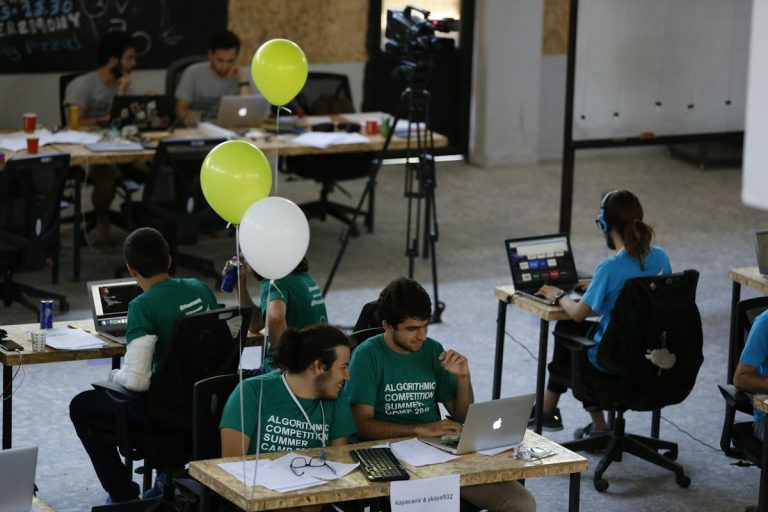
Grant funding for UK startups refers to non-repayable, equity-free financial awards distributed by government bodies, regional development agencies, and private trusts to encourage domestic innovation and commercial growth. To win these awards, early-stage businesses must prove novel technology or clear societal impact, assemble detailed project costings, and pass competitive peer-review evaluations. Unlike commercial business loans or early equity capital, winning a startup grant means you retain complete ownership of your company while validating your concept to future angel investors.
The Realities of Winning Grant Funding for UK Startups
Securing grant funding for UK startups is one of the most rewarding milestones an early-stage founder can achieve. You receive non-dilutive capital to de-risk technical research, test prototypes, and bring new commercial ideas to life without surrendering any equity or taking on crippling bank debt. However, the process is notoriously competitive. Tens of thousands of British businesses apply each year for a limited pool of capital, meaning your proposal must stand out on technical merit, commercial viability, and clean financial planning. Navigating this landscape requires an honest understanding of what assessors look for, how match-funding obligations work, and how public grants fit alongside equity capital when you Raise startup investment.
Winning public money is rarely about having a cool pitch deck. It is about presenting a water-tight business case that addresses specific public priorities, such as net-zero transitions, advanced manufacturing, life sciences, or artificial intelligence. Beyond government handouts, smart founders understand that public awards often require private backing to cover operational shortfalls. Integrating public grants with early-stage investor capital creates a balanced balance sheet, giving your venture credibility and runway. In this comprehensive guide, we unpack the entire UK funding ecosystem, explain the key providers, dissect the application mechanics, and show you how to blend public support with private backing smoothly.
What Types of Grants Exist for British Startups?
Before you spend weeks writing answers for an application portal, you need to know what category of capital fits your business model. Public and institutional grants across the UK fall into several clear brackets:
1. Research and Development (R&D) Grants
These awards target deep tech, life sciences, hardware, and disruptive software solutions. They fund high-risk innovation where commercial success is not guaranteed. Innovate UK is the biggest provider here, regularly issuing competitive calls under Smart Grants and thematic competitions.
2. Regional and Local Growth Hub Grants
England, Scotland, Wales, and Northern Ireland each run distinct regional schemes aimed at job creation, digital adoption, and local economic regeneration. These grants are often smaller, typically ranging from £1,000 to £50,000, and usually demand lower technical novelty than national R&D competitions.
3. Feasibility and Proof-of-Concept Awards
These small-scale grants help founders test whether an idea is technically possible before pouring hundreds of thousands of pounds into development. They cover prototype building, early lab testing, and initial customer validation studies.
4. Green and Sustainability Grants
If your startup reduces carbon emissions, improves energy efficiency, or advances the circular economy, you can tap into targeted funds backed by the Department for Energy Security and Net Zero. Green awards are currently among the most generously funded streams in the UK.
Major Sources of Grant Funding for UK Startups
Where should you actually look to submit an application? The UK has a tiered network of agencies, ranging from national bodies to local councils.
Innovate UK (UK Research and Innovation)
Innovate UK is the national innovation agency. Its flagship funding vehicle, the Innovate UK Smart Grant, supports game-changing, commercially viable R&D projects. Competitions run throughout the year with project sizes ranging from £100,000 up to £2 million. These grants operate on a co-funding model, meaning they will cover between 45% and 70% of eligible project costs depending on company size, leaving you to supply the remaining balance.
Beyond Smart Grants, Innovate UK runs targeted competitions for female founders, young entrepreneurs, and specific high-growth sectors like semiconductors, quantum computing, and agricultural technology.
The British Business Bank and Regional Funds
While the British Business Bank focuses predominantly on equity and debt, its regional funds frequently partner with local enterprise networks to deliver targeted grant-loan hybrids. Programmes like the Northern Powerhouse Investment Fund, the Midlands Engine Investment Fund, and the Investment Fund for Wales provide local business backing.
Devolved Administrations: Scotland, Wales, and Northern Ireland
If your company is registered outside England, you can access powerful devolved support structures:
- Scottish Enterprise: Provides R&D grants, SMART: SCOTLAND awards for technical feasibility, and High Growth Ventures support.
- Business Wales: Offers capital grants, decarbonisation funding, and digital support schemes designed to expand Welsh enterprise.
- Invest Northern Ireland: Funds innovation vouchers, technical development projects, and export growth plans for Northern Irish startups.
Local Growth Hubs and City Councils
Do not overlook your local council or Local Enterprise Growth Hub. Many metropolitan authorities run targeted grants for small businesses investing in new machinery, commercial lease deposits, or digital technology. The entry barriers for these regional funds are often significantly lower than national Innovate UK awards.
The Unspoken Truth: How Match Funding Really Works
One of the biggest surprises for first-time applicants is that pure 100% free money is extremely rare. Almost every meaningful startup grant requires match funding.
If you win an Innovate UK grant worth £200,000 with an intervention rate of 70%, the government reimburses you £140,000. You must supply the remaining £60,000 yourself. Furthermore, most UK public grants pay in arrears. This means you must incur the expenditure first, submit quarterly audit reports and invoices, and wait for reimbursement.
If your startup has zero cash in the bank, you cannot execute a grant project. This is precisely why institutional grants must be paired with external equity investment. Angel investors love backing grant-winning businesses because the non-dilutive award multiplies the impact of their invested capital.
When pitching to angel investors, highlighting tax-efficient schemes gives them immense confidence. Savvy founders use our Educational Tools to demonstrate how angel investors can claim generous tax reliefs under the Seed Enterprise Investment Scheme while providing the cash required to match public grant milestones.
Step-by-Step Application Guide: Crafting a Winning Submission
Applying for public funds demands methodical planning. Treat your application with the same precision you would use for an institutional venture capital round.
Step 1: Confirm Strict Eligibility Criteria
Do not write a single word until you have read the competition brief three times. Assessors fail submissions immediately if the project duration is one month too long, if your company type falls outside the guidelines, or if your requested funding level breaches regional limits. Verify your registration status on Companies House, ensure your accounts are up to date, and confirm your business meets the SME definition.
Step 2: Establish True Additionality
A core concept in public funding is additionality. You must convince independent assessors that without this public money, your project would either not happen at all, or would proceed at a drastically reduced scale and speed. If you are already fully profitable and have millions sitting idle, the government will not subsidise your R&D.
Step 3: Clearly Articulate the Innovation
Assessors read dozens of applications in a single sitting. You must explain your innovation in plain English. What is the fundamental technological step forward? Why can off-the-shelf commercial tools not solve this problem? What intellectual property (IP) will you generate, and how will it be protected?
Step 4: Map Out a Realistic Project Plan
Your project plan needs structured work packages, realistic milestones, and comprehensive risk registers. Break down the project into logical phases:
- Work Package 1: Architecture, technical specifications, and regulatory compliance.
- Work Package 2: Alpha prototype engineering and internal bench testing.
- Work Package 3: User testing, security auditing, and iterative refinement.
- Work Package 4: Commercial rollout, pilot programmes, and route-to-market execution.
Each work package must have designated deliverables, assigned team members, and calculated labour hours. Vague projections lead directly to rejected applications.
Step 5: Build an Auditable, Defensible Budget
Assessors will scrutinise your budget line by line. Eligible costs generally include direct labour costs, specialist contractor fees, materials, and a standard overhead allocation. Unrealistic salaries, inflated equipment purchases, or excessive marketing spend will be flagged immediately and could disqualify the entire application.
Common Pitfalls That Lead to Rejected Applications
Why do high-potential startups fail to secure grant funding? Understanding common mistakes helps you avoid them during drafting:
Overpromising on Timelines
Technical development almost always encounters roadblocks. An application claiming a complex machine-learning engine or medical diagnostic tool can be built from scratch in four months suggests founder naivety to experienced evaluators.
Lack of a Commercial Exploitation Plan
Public bodies do not fund projects just for academic interest. They want to see how your project leads to domestic sales, taxable revenue, export opportunities, and regional job creation. If your commercialisation section is an afterthought, your application will receive low scores.
Ignoring the Wider Market Landscape
Claiming you have no competitors is an immediate red flag. Evaluators know every market has incumbents or adjacent alternatives. Clearly detail your competitors, analyse their weaknesses, and articulate your unfair commercial advantage.
Rushing the Final Submission
Grant portals frequently crash during the final two hours before a deadline due to high server traffic. Complete your draft early, run it through internal quality reviews, and submit at least 24 hours ahead of the cut-off time.
How Public Grants Complement Angel Investment
Grant funding should not exist in a silo. Relying entirely on grants leaves you vulnerable to irregular funding cycles, application review delays, and strict limits on how capital can be deployed. Grants cannot be used for routine business operations, sales teams, or general overheads outside the approved project scope.
By contrast, private equity gives you complete operational flexibility. The strongest UK startups deploy a dual strategy: they leverage grant awards to fund deep, high-risk technical development, while raising angel capital to finance commercial marketing, sales expansion, and operational hires.
Angel investors actively search for ventures that have won competitive public funding because it acts as independent, third-party validation. If technical experts at Innovate UK have vetted your technology and deemed it viable, an angel investor’s technical risk is substantially reduced. To discover early-stage companies blending public innovation with private capital, investors frequently Explore SEIS and EIS investments across vetted sectors.
Unlocking Private Capital Alongside Grants with Oriel IPO
When you need to secure the private funds required for match funding, finding the right individual investors quickly is paramount. Traditional funding routes often involve steep broker cuts, long advisory contracts, and protracted negotiation cycles.
This is where the Oriel Investment Marketplace transforms how founders secure early equity. Operating as a dedicated investment marketplace, Oriel IPO connects ambitious British founders with active angel investors interested in Tax saving investments. Rather than taking a substantial percentage of your hard-earned capital upon closing, the platform uses a clear subscription-based framework. Startups maintain ownership of their round without being penalized by transaction commissions.
For founders building projects supported by grant funding for UK startups, having rapid access to private investors who understand government tax incentives like SEIS and EIS is invaluable. You can present your validated, grant-backed concept to investors who are primed to offer match funding while claiming up to 50% income tax relief on their investment. If you want to review the full details of how our transparent platform works, you can explore the Oriel IPO membership plans.
Crucial Financial and Tax Considerations: R&D Tax Credits
Winning a grant has direct implications for your wider corporate tax strategy, particularly your Research and Development (R&D) Tax Relief claims.
Under HMRC guidelines, funding an R&D project with a government grant can impact how you claim R&D tax relief for those specific expenditures. Historically, receiving state aid meant projects were pushed from the generous SME R&D scheme into the less lucrative RDEC (Research and Development Expenditure Credit) system. Following recent tax reforms and the consolidation of the merged R&D scheme, founders must carefully map every pound spent to ensure compliance.
- Keep meticulous records of which project costs are funded by the grant and which are paid from your private equity reserves.
- Never double-dip by claiming the exact same expenditure under a public grant and an R&D tax credit cash reimbursement.
- Consult a qualified accountant or tax professional before submitting annual corporate tax filings to avoid penalties.
Maintaining strict financial governance not only satisfies public grant auditors, it also gives private investors confidence that your corporate structure is clean and ready for institutional scale.
Practical Next Steps for Your Startup
If you are ready to pursue grant funding, do not wait for a major funding call to open. Lay the groundwork immediately:
- Monitor Portals Weekly: Bookmark the Innovate UK Innovation Funding Service portal and check your local Growth Hub bulletins every Monday.
- Prepare Core Documentation: Have your Companies House filings, up-to-date management accounts, CVs of key technical staff, and project outlines formatted and ready to deploy.
- Secure Match Capital: Calculate your working capital requirements. Ensure you have the cash reserves or investor commitments lined up to support the grant reimbursement cycle.
- Engage the Wider Ecosystem: Discuss your propositions with advisers, innovation consultants, and fellow founders who have previously won awards in your sector.
Combining public grant support with private investment creates an enduring foundation for commercial growth. Use grants to de-risk your technical architecture, protect your cap table, and validate your business in the eyes of the market. Then, back your ambition with private capital to scale without artificial constraints. When you are ready to bring angels into your journey and fuel long-term expansion, Showcase your startup on Oriel IPO and connect directly with investors looking to back the next generation of British enterprise.