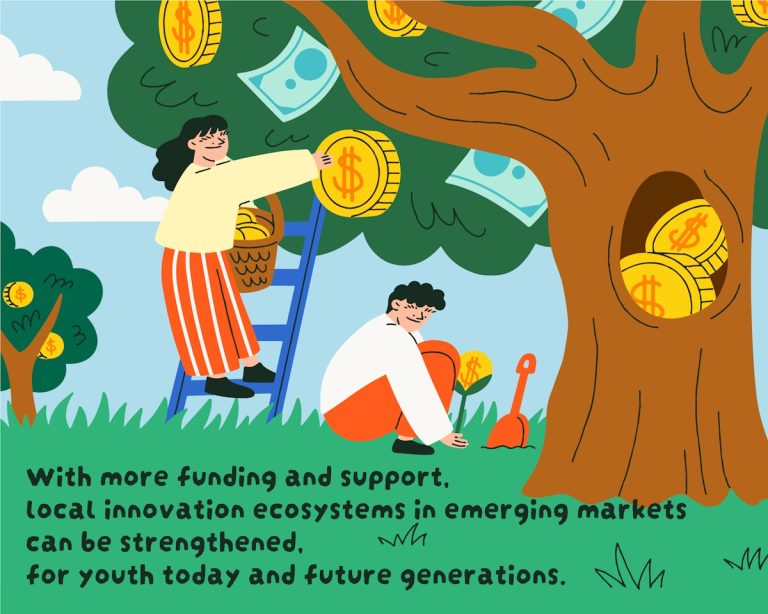
The AXA Startup Angel competition is an annual contest run by AXA UK alongside The Evening Standard that provides winning early-stage entrepreneurs with up to £25,000 in non-dilutive seed funding, expert mentorship, and commercial business insurance. It offers emerging British enterprises a national launchpad, combining cash grants with high-profile exposure to help test or expand their ideas without surrendering company equity.
Winning a grant contest gives any new venture an incredible boost, yet true long-term scaling requires building a repeatable capital acquisition model. In this complete guide, you will discover the exact eligibility requirements, the prizes on offer, step-by-step application advice, and how to combine contest wins with private backing via tax-efficient frameworks like SEIS and EIS.
The Reality of Entering the AXA Startup Angel Competition
Starting a new company in Britain demands resilience, relentless testing, and access to capital. The AXA Startup Angel competition provides early-stage innovators with a rare opportunity to capture non-dilutive capital, gain national media visibility, and receive guidance from seasoned business leaders. Winning one of the top spots does more than deposit funds into your bank account; it provides a stamp of legitimacy that can open doors across the entire United Kingdom commercial ecosystem.
Competitions should rarely be your sole financial plan, however. Thousands of brilliant founders pitch every year for just a handful of slots. To ensure your business thrives regardless of who takes the trophy, savvy founders run competition entries alongside sustainable angel funding methods. Whether you are aiming to Raise startup investment through private angel networks or test your pitching skills before a live judging panel, treating your pitch as an investment-grade asset gives you an undeniable advantage.
What Is the AXA Startup Angel Competition?
The AXA Startup Angel competition is a partnership between insurer AXA UK and media organisation The Evening Standard. Established to support early-stage enterprise across Britain, the initiative awards cash prizes, mentoring sessions, and insurance packages to selected founders with practical, innovative, or socially beneficial concepts.
Unlike traditional venture capital or private equity rounds, grant competitions hand over prize money without taking any equity or requiring founder personal guarantees. That means zero share dilution, no board seats surrendered, and full operational autonomy for your founding team. You receive the cash, use it to build your prototype or launch your marketing tests, and keep complete ownership of your company’s share capital.
Competitions like this serve three specific purposes for early-stage ventures:
- Non-dilutive capital injections: You secure up to £25,000 without sacrificing equity percentages.
- National public relations: You earn exposure in national print and digital media, attracting potential clients and angel investors.
- Operational resilience: You gain direct access to risk management advice, well-being support, and executive mentorship.
Who Is Eligible to Apply for the AXA Startup Angel Competition?
Before spending hours crafting your submission, you must verify that your business meets the entry criteria. While specific rule sheets update slightly between seasons, the core eligibility conditions remain consistent:
- UK Registration: Your business must be registered and based entirely within the United Kingdom.
- Early Trading Stage: Entrants typically need to be pre-revenue, newly formed, or have traded for fewer than three full financial years.
- Team Size: You must fit within the micro-business or small enterprise definition, typically employing fewer than ten full-time staff.
- Operational Ownership: The applicant must be a primary founder, holding significant equity and decision-making control.
- Direct Solvency: The business cannot be in administration, facing winding-up petitions, or carrying unresolved statutory default judgments.
Judges look closely for scalability and viability. A local services enterprise might be solid and profitable, but competitions often favour businesses that solve larger societal issues, showcase technological ingenuity, or exhibit clear nationwide expansion potential.
Prize Breakdown: What Do Winners and Finalists Receive?
The prize package of the AXA Startup Angel competition is designed to address the common points of failure that kill early-stage companies: lack of liquidity, poor commercial risk coverage, weak brand visibility, and founder isolation.
Top Prize Winners
Each grand prize winner receives a comprehensive package focused on accelerating their business trajectory:
- £25,000 in Non-Dilutive Capital: Cash placed directly into your business bank account to finance hiring, inventory, software development, or user acquisition.
- Twelve Months of Business Insurance: Practical insurance coverage provided by AXA, protecting your company against public liability, professional indemnity, or contents loss.
- Direct Angel Mentorship: Dedicated one-on-one strategy sessions with the named competition angels, helping you refine pricing, navigate hiring, and build financial models.
- Founder Health Support: Access to mental health resources, wellness workshops, and significant fee discounts on health insurance schemes to prevent founder burnout.
Runners-Up and Category Finalists
Even if you do not claim the £25,000 top prize, finalists often secure prizes worth over £18,000 in commercial value:
- Editorial Profiles: Dedicated feature coverage in The Evening Standard, giving you immediate media reach across hundreds of thousands of readers.
- Digital Marketing Clinics: Specialised workshops led by experienced media planners to help sharpen your digital acquisition channels.
- Event Passes: VIP tickets to premier small business showcases such as the SME XPO, providing valuable networking with suppliers and potential seed investors.
How to Build a Standout Application
When judges review hundreds of entries across a single weekend, generic pitches get ignored quickly. Your written application must be sharp, clear, and focused on facts. Here is the framework you should follow.
1. Nail the Problem-Solution Loop in Twenty Words
Avoid jargon, buzzwords, or convoluted industry terminology. State the exact customer problem, how much that problem costs the customer in time or money, and how your product fixes it.
Weak: “We leverage advanced synergistic cloud infrastructure to revolutionise how enterprises interact with retail logistics.”
Strong: “UK independent couriers lose £180 each week due to inefficient drop routing. Our mobile app cuts fuel bills by 18% automatically.”
2. Demonstrate Clear Market Validation
You do not necessarily need £100,000 in annual recurring revenue to prove validation. Judges want to see that someone other than your immediate family cares about what you are building. Include:
- Waitlist numbers with verifiable conversion rates.
- Pre-orders or letters of intent from commercial buyers.
- Results from paid pilot projects or early beta user interviews.
- Engagement numbers from focused target audiences.
3. Detail Exactly How the £25,000 Will Be Spent
Never write that the prize money will go toward “general growth” or “working capital.” Judges want to see a precise balance sheet showing accountability and foresight. Break your budget down into verifiable chunks:
- £9,000 for final iOS and Android app development.
- £6,000 for initial inventory tooling and sustainable packaging batches.
- £5,000 for targeted digital testing across high-intent acquisition channels.
- £5,000 for industry regulatory compliance and safety testing.
Showing this level of discipline proves that you respect capital and can be trusted with a non-dilutive award.
Why Competitions Are Only Step One in Your Funding Journey
Winning £25,000 through the AXA Startup Angel competition will provide breathing room, but seed capital burns faster than most first-time entrepreneurs expect. Building a physical product, hiring technical specialists, purchasing inventory, and running marketing campaigns quickly drains initial prize money.
Competitions are best viewed as top-of-funnel momentum builders. The credibility gained from winning or placing as a finalist should be used immediately to open conversations with private investors. Smart entrepreneurs leverage this momentum to Discover startup opportunities and attract angel syndicates who can write checks of £50,000, £100,000, or £250,000.
If you rely solely on grants and awards, you risk slowing your company down. Competition review cycles take months, entry dates are rigid, and the final decision is often subjective. You must build an independent, ongoing capital strategy.
Unlocking Private Capital: The Power of SEIS and EIS
In the United Kingdom, private angel investors rarely invest solely out of generosity. They look for commercial viability combined with statutory protection. The UK government maintains two world-class initiatives designed specifically to drive private cash into early-stage businesses: the Seed Enterprise Investment Scheme (SEIS) and the Enterprise Investment Scheme (EIS).
If you pitch to angel investors without having your SEIS or EIS advance assurance sorted, you instantly put yourself at a massive disadvantage. High-net-worth individuals and angel networks actively look for these relief structures to mitigate early-stage downside risk.
The Seed Enterprise Investment Scheme (SEIS)
SEIS is aimed directly at very early-stage companies. Under current UK guidelines, startups can raise up to £250,000 in SEIS funding during their first three years of qualifying trade. For your investors, the tax reliefs are unmatched:
- 50% Income Tax Relief: An investor who puts £20,000 into your SEIS-eligible business can deduct £10,000 directly from their income tax liability for that tax year.
- Capital Gains Exemption: If your company succeeds and the shares are held for at least three years, any profit made on the sale of those shares is 100% free from Capital Gains Tax.
- Loss Relief: If the startup underperforms, the investor can write off their net loss against their income tax bill, dramatically cushioning the downside.
To make your business attractive to angels, you can Learn about SEIS and present advance assurance alongside your competition credentials.
The Enterprise Investment Scheme (EIS)
Once your business grows beyond the initial £250,000 SEIS allowance, the Enterprise Investment Scheme comes into play. EIS allows startups to raise up to £5 million per year, with a lifetime limit of £12 million (or £20 million for knowledge-intensive companies). EIS provides:
- 30% Income Tax Relief: Immediate tax reduction on qualifying investments up to £1 million (or £2 million if investing in knowledge-intensive ventures).
- Capital Gains Deferral: Investors can defer capital gains earned from other assets by reinvesting those funds into EIS-qualifying shares.
- Inheritance Tax Exemption: EIS shares held for at least two years generally qualify for Business Property Relief, shielding them completely from inheritance tax liabilities.
Founders who Learn about EIS demonstrate that they understand how wealth creators manage portfolio risk, giving them an advantage when pitching for larger rounds.
How to Combine Contests with Investor Readiness
How do you turn a competition application into a scalable private fundraising campaign? You create assets that serve both avenues.
| Fundraising Stage | Competition Application | Private Angel Round (SEIS/EIS) |
|---|---|---|
| The Core Pitch | 200-word written answers, concise forms, 60-second video submission | 10-to-15 slide investor deck, data room, technical architecture overview |
| Financial Proof | Basic unit economics, high-level use of £25,000 prize grant | 3-year financial forecast, cash burn rate, cash runway models, valuation cap |
| Validation Metrics | Customer quotes, pilot signups, waitlist growth numbers | Customer acquisition cost (CAC), lifetime value (LTV), monthly churn rates |
| Legal Foundation | UK business registration number, founder identity checks | Articles of association, share capital registry, HMRC Advance Assurance |
| Outcome | Non-dilutive prize grant (£25k), PR, business insurance | Equity-for-capital exchange (£100k – £500k+), long-term strategic board help |
By treating the AXA Startup Angel competition as a stepping stone, your team builds the operational collateral needed to secure serious angel funding. If you win the competition, the £25,000 can cover early testing costs, product prototyping, and accounting fees. If you do not win, your pitch deck and data room are already prepared to showcase to external angels.
The Role of Professional Advisers in Startup Growth
Many founders attempt to handle company formation, advance assurance, and tax structures on their own. This often leads to errors. HMRC rules surrounding SEIS and EIS eligibility are strict. If your articles of association contain non-compliant share liquidation preferences, or if you issue shares before receiving payment, you can permanently invalidate your tax relief eligibility.
Working with proactive accountants and corporate finance advisers prevents these costly administrative mistakes. Forward-thinking finance professionals Help clients with SEIS and EIS to establish compliant share structures, submit correct paperwork, and maintain proper cap table management from day one.
Avoiding the Common Pitfalls of Startup Competitions
Startup competitions offer great exposure, but many founders waste valuable energy by making easily avoidable mistakes. Here is what to avoid:
Chasing Grant Vanity Over Customer Feedback
Some founders become full-time competition entrants. They spend months polishing contest entries rather than talking to real paying customers. Contests do not build sustainable companies; paying customers do. Enter high-value contests like AXA Startup Angel, submit a compelling application, and then return immediately to refining your core product.
Neglecting Intellectual Property Protection
Competitions require public exposure. If your business depends on a patentable process, proprietary chemical formula, or distinctive branding, ensure you have submitted your patent applications or registered your trademarks before presenting your concept to judges and national news publications.
Failing to Plan for Year Two and Beyond
Winning £25,000 in year one can create a false sense of security. Without a clear runway strategy, that capital will evaporate within four to six months. Successful founders use competition funds to reach clear operational milestones that make the business attractive for a larger private investment round.
Why Commission-Free Platforms Change the Fundraising Equation
When you decide to raise private seed capital from external angel investors, you face a major hurdle: transaction costs. Traditional equity crowdfunding platforms and broker-dealers often take significant percentages of the total capital raised. A 7% platform fee combined with legal and administrative charges can wipe out £15,000 to £25,000 from a typical £250,000 seed round.
This is why modern entrepreneurs increasingly prefer transparent, commission-free marketplaces. Oriel IPO operates the Oriel Investment Marketplace, an online environment connecting founders with angel investors interested in tax-efficient opportunities under SEIS and EIS. Instead of taking a cut of the funds you raise, Oriel IPO operates on a transparent subscription model, ensuring that every pound of equity you surrender goes straight into company growth rather than intermediary fees.
Through vetted showcases and dedicated Educational Tools, founders learn how to present their investments professionally, while investors can discover curated early-stage UK opportunities that offer valuable tax advantages.
Preparing Your Next Moves: Step-by-Step Checklist
To maximise your chances of securing early-stage funding this year, follow this structured plan of action:
- Audit Your Competition Eligibility: Verify that your UK company formation is current, your filing deadlines are met, and your operational narrative meets the AXA Startup Angel entry parameters.
- Draft Your High-Impact Pitch: Distil your value proposition down to simple terms. Focus on problem validation, target market scale, and unit economics.
- Secure HMRC Advance Assurance: Apply for SEIS and EIS advance assurance from HMRC. Having this status confirmed before you meet investors removes doubt and accelerates deal flow.
- Audit Your Risk Management: Review your commercial insurance needs. Even before winning insurance prizes, understanding professional indemnity and public liability risks makes your business look professional to partners and judges.
- Build an Angel Pipeline: Do not wait for grant competition announcements to begin meeting investors. Join investment marketplaces, network with experienced angels, and prepare your investment materials in advance.
Competitions and angel investing should work hand in hand. Use the AXA Startup Angel competition to test your proposition, gain national visibility, and secure non-dilutive capital. At the same time, anchor your long-term growth in a structured, tax-efficient fundraising strategy that gives serious investors a compelling reason to support your business.
Take the next step in your business journey today. Revolutionizing Investment Opportunities in the UK is our mission at Oriel IPO, where we help early-stage ventures connect directly with motivated angel investors through our commission-free marketplace.