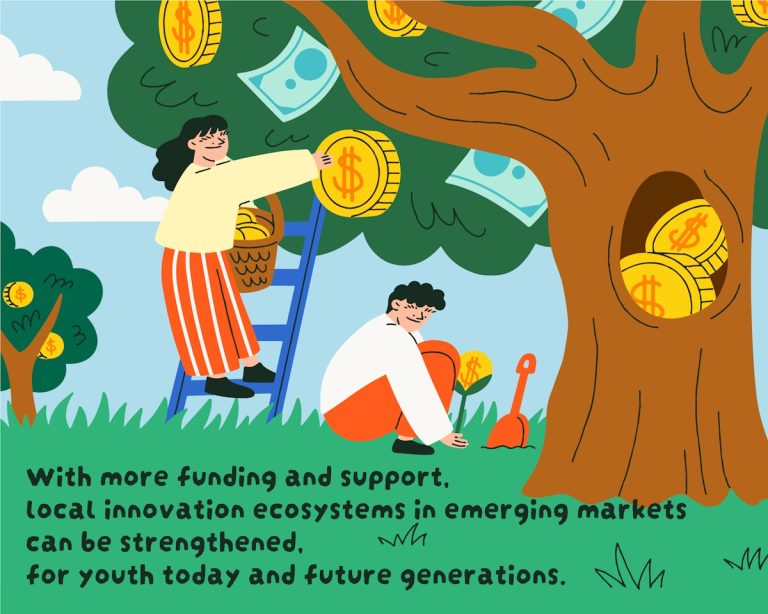
Clean energy tax incentives in the UK allow private investors and businesses to reduce their income tax by up to 50%, eliminate capital gains tax, and shelter wealth while funding the green energy transition. By backing qualifying early-stage cleantech companies through government initiatives like the Seed Enterprise Investment Scheme (SEIS) and Enterprise Investment Scheme (EIS), UK taxpayers can systematically de-risk high-growth sustainable investments. Navigating these incentives requires matching eligible green technologies with the right investment structures to secure maximum statutory reliefs from HM Revenue & Customs (HMRC).
Unlocking Clean Energy Tax Incentives UK: The Complete Investor Overview
Investing in sustainable technology is not just about cutting carbon anymore; it is about building sensible, tax-efficient wealth. The UK government knows that reaching Net Zero requires enormous amounts of private funding. To encourage this shift, policymakers have made the UK one of the most generous tax environments in the world for early-stage green ventures. Through targeted clean energy tax incentives UK investors can support breakthrough climate innovations while writing off significant portions of their income tax liabilities and protecting future returns against capital gains. If you want to put your money to work productively, you can Explore SEIS and EIS investments and back pre-vetted green innovators today.
Yet, many individuals stumble over the complex compliance rules laid down by HMRC. Clean energy projects often have specific asset profiles, operational timelines, and capital expenditure needs that demand strict attention to qualifying trade rules. When done correctly, integrating tax saving investments into your wider portfolio transforms high-risk cleantech investing into a mathematically resilient strategy. Whether you are an angel investor looking to balance portfolio risk or a professional adviser guiding clients toward greener horizons, understanding how to harvest these reliefs is essential.
What Are Clean Energy Tax Incentives in the UK?
Clean energy tax incentives in the UK represent statutory tax reliefs and allowances designed to direct private capital toward renewable generation, energy storage, decarbonisation software, and grid efficiency innovations.
Historically, simply generating electricity from renewable sources (like commercial solar farms or large wind installations) qualified for broad venture schemes. However, HMRC adjusted the rules to prevent passive, low-risk energy generation from soaking up venture capital subsidies. Today, clean energy tax incentives UK schemes focus primarily on true innovation: hardware engineering, clean transport, green hydrogen development, battery technology, and smart grid software.
By targeting high-growth, high-innovation enterprises, these incentives provide upfront income tax reductions, inheritance tax exemptions, loss relief buffers, and capital gains exemptions. They bridge the gap between initial research and broad commercial deployment.
Why Does the UK Government Provide Tax Relief for Green Tech?
The UK has legally binding commitments to achieve Net Zero greenhouse gas emissions by 2050. Meeting those targets demands billions of pounds in research, prototyping, and infrastructure upgrades. Traditional banks rarely lend to early-stage technology companies without proven cash flow. Venture debt can be cripplingly expensive for young firms.
To solve this funding squeeze, the government leans on angel investors and early-stage venture syndicates. By offering aggressive tax credits, the state absorbs a substantial portion of the financial downside. If an early-stage cleantech startup succeeds, the entire economy benefits from domestic green intellectual property, high-skilled job creation, and cheaper sustainable power. If the venture fails, the investor’s downside is significantly mitigated through statutory tax write-offs.
How Do SEIS and EIS Drive Clean Energy Investments?
The Seed Enterprise Investment Scheme (SEIS) and Enterprise Investment Scheme (EIS) are the flagships of early-stage UK investment relief. For green technology founders, these schemes represent the lifeblood of seed and Series A fundraising rounds.
The Seed Enterprise Investment Scheme (SEIS)
SEIS targets brand-new, high-risk ventures. If you invest in an eligible early-stage clean energy company, you receive:
– 50% Upfront Income Tax Relief: Invest £50,000, and HMRC reduces your income tax bill by £25,000 for that tax year.
– Reinvestment Relief: If you realise an existing capital gain from another asset (such as selling property or public shares) and invest it into an SEIS-qualifying startup, you can claim a 50% capital gains tax exemption on that gain.
– Annual Cap: Individual investors can deploy up to £200,000 per tax year under SEIS rules, while companies can raise up to £250,000 in total SEIS funding.
To learn the fundamental rules and explore how seed-stage cleantech companies qualify, take time to Learn about SEIS before allocating capital.
The Enterprise Investment Scheme (EIS)
EIS caters to slightly larger, scaling businesses. Once a clean energy startup moves past its initial proof-of-concept and begins scaling up operations or manufacturing, it moves into EIS territory:
– 30% Upfront Income Tax Relief: Invest £100,000, and your income tax liability drops by £30,000.
– Higher Investment Caps: Investors can commit up to £1,000,000 per tax year (or £2,000,000 if the excess is invested in Knowledge Intensive Companies, which many cleantech ventures qualify as).
– Company Funding Caps: A business can raise up to £5 million per year under EIS, up to a lifetime total of £12 million (or £20 million for Knowledge Intensive Companies).
If you want to support growth-stage environmental solutions, you can Explore EIS opportunities to see how larger cleantech raises operate.
Beyond Income Tax: CGT and Loss Relief
Both schemes carry additional tax shields that make clean energy tax incentives UK opportunities particularly compelling:
– 100% Capital Gains Tax Exemption: Hold your shares for a minimum of three years, and any profit you make on their sale is entirely free of Capital Gains Tax.
– Loss Relief Protection: If a speculative clean technology startup collapses, you can offset your net loss (the original investment minus the upfront tax relief already claimed) against your income tax or capital gains tax. This effectively caps total loss exposure at a fraction of the deployed capital.
– Inheritance Tax (IHT) Exemption: Qualifying shares held for at least two years generally qualify for Business Relief, removing them from your taxable estate for IHT purposes.
What Types of Clean Energy Projects Qualify for Tax Incentives?
Understanding the boundary between qualifying and excluded activities is critical. HMRC has strict rules around what constitutes a “qualifying trade” for venture capital schemes.
Qualifying Cleantech Activities
- Clean Energy Software and AI: Platforms optimising renewable microgrids, peer-to-peer energy trading networks, or EV charging load management.
- Hardware Innovation: Developing next-generation wind turbine blade materials, advanced solar photovoltaic cells, or heat pump components.
- Energy Storage Solutions: Lithium-alternative battery chemistry, thermal storage, or kinetic flywheel systems.
- Carbon Capture and Materials: Direct air capture machinery, biochar processing systems, and circular waste-to-energy technologies.
Excluded Activities
Under current UK venture scheme rules, ordinary commercial generation of electricity (such as buying fields to install standard solar panels and selling the energy straight to the National Grid under a feed-in tariff or standard power purchase agreement) is explicitly excluded from SEIS and EIS. HMRC insists that the business must carry commercial risk and technological innovation, rather than steady, predictable asset-backed income generation.
How Can UK Startups Attract Investment Using Clean Energy Incentives?
If you are a founder building a green tech startup, your biggest hurdle is often securing initial capital to run lab tests or build physical prototypes. Clean energy tax incentives UK frameworks give you a decisive edge when pitching to private investors.
Here is how founders can leverage these schemes effectively:
1. Secure Advance Assurance: Before opening your fundraising round, apply for Advance Assurance from HMRC. This official provisional approval confirms that your business model and share structure meet scheme rules, giving angel investors absolute confidence that their tax relief is secure.
2. Structure Clean Shares: Ensure your company issues only ordinary shares with no preferential dividend rights or guaranteed redemption terms. HMRC insists that investors take genuine equity risk.
3. Showcase on Specialised Marketplaces: Rather than relying purely on personal networks, display your pitch where active angel investors congregate. If you are preparing an early-stage round, you can Raise startup investment by publishing your proposition directly to active capital allocators.
The Strategic Role of Accountants and Tax Advisers
Navigating venture tax schemes requires careful administrative handling. Accountants and professional financial advisers sit at the centre of the early-stage green economy. When advisers help high-net-worth clients identify tax saving investments, they deliver tangible savings while assisting family estates with generational wealth transfers.
Advisers should systematically examine:
– Carry-Back Opportunities: Investors can elect to treat some or all of an EIS or SEIS investment as if it were made in the preceding tax year, unlocking immediate tax refunds against historical earnings.
– Connected Person Rules: Investors must ensure they do not own more than 30% of the voting power or share capital, nor can they be paid employees of the company (although unremunerated directors or business angels may qualify under specific exceptions).
– Compliance Certification (EIS3 and SEIS3): Ensuring that startup clients file their compliance statements quickly so that investors receive their official certificates in time for their annual self-assessment returns.
Practices wanting to streamline their advisory workflow can Help clients with SEIS and EIS through dedicated platform tools built to simplify portfolio tracking and document distribution.
How the Oriel Investment Marketplace Bridges the Green Funding Gap
Traditional investment platforms often charge hefty percentage-based success fees on funds raised, stripping vital cash away from early-stage businesses right when they need it most. The Oriel Investment Marketplace provides an alternative model that benefits both sides of the table.
Through its transparent, commission-free approach, the marketplace connects startup founders with angel investors, family offices, and professional advisers without taking a slice of the investment round. Instead, the platform relies on a fair subscription model that keeps early-stage capital working where it belongs: inside the business.
Investors can discover vetted, high-potential startups targeting clean energy tax incentives UK opportunities. At the same time, founders gain access to an active community of sophisticated angels ready to back sustainable ventures. Through accessible educational tools, guides, and structured dashboards, the platform strips the operational friction out of early-stage equity funding.
To see how the platform operates and manage your active investments, you can Access the Oriel IPO Hub at any time.
Step-by-Step: How to Claim UK Clean Energy Tax Relief on Your Self-Assessment
Claiming your statutory tax relief is straightforward, provided you follow the procedural steps set out by HMRC:
- Complete the Investment: Finalise your equity subscription and ensure the cash transfer is executed into the clean energy company’s bank account.
- Wait for Trading or Capital Spend: The issuing company must have traded for at least four months, or spent at least 70% of the raised funds, before it can submit its formal compliance statement (form SEIS1 or EIS1) to HMRC.
- Receive Form SEIS3 / EIS3: Once HMRC inspects and approves the company’s submission, it issues certificates (SEIS3 or EIS3) to the business, which then forwards them to you.
- Fill Out Your Tax Return: Enter the claim details into the Additional Information section (pages Ai 2 or Ai 3) of your UK self-assessment return. You will need the name of the company, the date of share issue, the amount invested, and the unique HMRC reference number from your certificate.
- Apply Carry-Back Relief (Optional): If you wish to claim relief against the prior year’s income tax liability, indicate the exact amount you wish to treat as carried back.
- Retain Your Documentation: Keep your physical or digital certificates safely on file for at least six years. If you sell your shares within three years, or if the company ceases to conduct a qualifying trade, HMRC may claw back the relief.
Common Pitfalls to Avoid with Green Tax Incentives
Even seasoned investors occasionally fall foul of technical HMRC rules. Here are the most common pitfalls to monitor:
1. Falling Afoul of the Three-Year Holding Period
To keep your income tax relief and maintain capital gains tax freedom, you must hold your shares for at least three full years from the date of issue (or three years from the date the company began trading, whichever is later). Selling or transferring shares prematurely triggers an immediate tax clawback.
2. Investing via Disqualified Vehicles
SEIS and EIS reliefs are granted exclusively to individuals. You cannot claim these reliefs if you invest through a standard limited company, an offshore trust, or an unapproved partnership vehicle. The shares must be issued directly to your personal name.
3. Disqualifying Value Transfers
If the startup gives you any abnormal financial benefit, cheap product access, or non-commercial return of value during the restricted period, HMRC can disqualify your shares retroactively.
4. Overlooking Knowledge Intensive Company (KIC) Rules
Many green technology businesses spend massive amounts on laboratory research and employ scientists or engineers with postgraduate qualifications. These firms frequently qualify as Knowledge Intensive Companies. Failing to register KIC status means startups miss out on higher annual funding limits (£10m annually vs £5m for standard EIS) and investors lose access to expanded £2m allowances.
Comparing Key UK Venture Schemes for Clean Energy Investors
| Feature | Seed Enterprise Investment Scheme (SEIS) | Enterprise Investment Scheme (EIS) |
|---|---|---|
| Target Stage | Pre-seed / Seed (< 3 years trading) | Early Stage / Scale-up (< 7 years trading, 10 if KIC) |
| Income Tax Relief | 50% upfront | 30% upfront |
| Annual Investor Limit | £200,000 | £1,000,000 (£2m for KIC) |
| Max Company Raise | £250,000 lifetime | £5m annually (£12m lifetime; £20m if KIC) |
| Capital Gains Exemption | 100% after 3-year holding period | 100% after 3-year holding period |
| CGT Reinvestment Relief | 50% exemption on prior gains | Deferral of prior gains until share sale |
| Minimum Holding Period | 3 years | 3 years |
What Does the Future Hold for Green Tax Incentives in the UK?
As global competition for green capital intensifies, the UK government is under sustained pressure to keep its domestic framework attractive. The global cleantech market is expanding rapidly, with major economies deploying vast subsidy programmes to draw innovators away from Britain.
In response, the UK has repeatedly reaffirmed its commitment to venture schemes, extending sunset clauses and increasing statutory limits. Future adjustments are likely to streamline the administrative process around Advance Assurance, expand allowances for deep-tech decarbonisation solutions, and provide tighter integration between regional development hubs and private angel networks.
For investors, this means the environment for backing sustainable early-stage technologies will remain robust. By pairing intelligent wealth planning with early exposure to transformative energy companies, individuals can play a direct role in decarbonising the economy while enjoying some of the most generous tax shields available in modern finance.
How to Build a Clean Energy Tax Relief Strategy
Putting together a balanced approach does not mean gambling everything on a single speculative venture. Professional investors treat early-stage cleantech investing as an asymmetric portfolio allocation:
- Spread Allocations Across Sectors: Rather than backing only battery makers, diversify into grid software, agricultural technology, and alternative heating devices.
- Blend SEIS and EIS: Allocate smaller cheques to high-upside SEIS concepts at 50% tax relief, while placing larger, stabilising sums into EIS ventures with validated prototypes at 30% relief.
- Use Carry-Back Wisely: Coordinate your investments with your tax calendar. If you had an unusually high income tax liability in the previous tax year, use the carry-back mechanism to pull relief backward and trigger a cash rebate.
- Work With Qualified Intermediaries: Use educational tools and structured marketplaces to review founders, read pitch documents, check HMRC advance assurance paperwork, and understand legal terms thoroughly.
Ready to transform your approach to sustainable equity funding? Start by reviewing how Tax saving investments can strengthen your financial position while funding the next wave of British clean energy innovation.