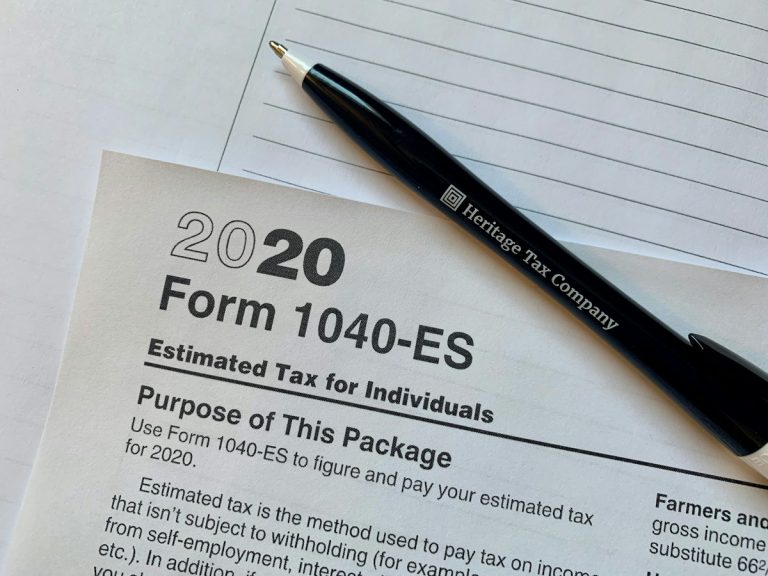
SEIS and EIS tax relief schemes are UK government initiatives that offer private investors up to 50% (SEIS) or 30% (EIS) upfront income tax relief, alongside capital gains tax exemptions, loss relief, and 100% inheritance tax relief. Designed to encourage investment into early-stage British enterprises, these programmes let UK taxpayers offset high startup risks against their tax liabilities while giving early-stage businesses critical growth capital.
Investing in young companies is undeniably thrilling, but nobody pretends it comes without real risk. The UK government recognised this decades ago and built two of the most generous venture schemes in the world: the Seed Enterprise Investment Scheme (SEIS) and the Enterprise Investment Scheme (EIS). Whether you are an angel investor looking to shelter gains or a founder planning your next funding round, knowing exactly how these two frameworks compare is essential.
Why SEIS and EIS Tax Relief Is the Backbone of UK Angel Investing
Backing early-stage British businesses carries natural risk, but the UK tax code provides an unmatched cushion to soften the blow. Through SEIS and EIS, qualifying private individuals can dramatically reduce their income tax bill, protect themselves if a company goes under, and completely eliminate capital gains tax when selling shares at a profit. You can Explore SEIS and EIS investments to view curated, direct opportunities and discover how private wealth fuels British innovation.
At the same time, founders use these schemes as a vital fundraising magnet. If you offer investors genuine upside paired with government-backed downside protection, closing a funding round becomes substantially smoother. Dedicated platforms offering Tax saving investments give angel investors transparent access to verified opportunities without slicing off hefty commissions from founders.
What Is the Seed Enterprise Investment Scheme (SEIS)?
The Seed Enterprise Investment Scheme launched in 2012 to support the earliest, rawest phase of business growth: the seed stage. Because seed-stage companies carry the highest failure rates, HM Revenue & Customs (HMRC) rewards backers with the most aggressive tax breaks available in the UK.
How Much Income Tax Relief Can You Claim Under SEIS?
Under SEIS, you can claim 50% income tax relief on investments up to £200,000 per tax year. That means if you invest £20,000 in an eligible startup, your personal income tax liability drops by £10,000.
To keep that tax break, you must hold the shares for at least three full years from the date they are issued. If you do not have enough tax liability in the current tax year, SEIS allows a “carry back” facility. You can treat some or all of the investment as if you made it in the preceding tax year, provided you had not already exceeded the maximum annual limit in that previous year.
How Does SEIS Capital Gains Tax (CGT) Reinvestment Relief Work?
If you sell an asset (like a second home, crypto, or public equities) and make a capital gain, SEIS offers an extra bonus called Reinvestment Relief. If you roll that gain directly into SEIS shares, you receive a 50% exemption on the capital gains tax due on that original gain.
Imagine you made a £40,000 taxable gain on public shares. If you reinvest that full £40,000 into SEIS-qualifying startup shares, you wipe out CGT on £20,000 of the original gain entirely. Combine that with the upfront 50% income tax relief, and the initial tax efficiency is difficult to beat anywhere in private wealth management.
What Are the Company Rules to Qualify for SEIS?
Startups cannot simply label themselves as SEIS. They must meet stringent HMRC criteria:
- Trading Age: The company must have started trading less than three years prior to the share issue date.
- Gross Assets: The business must own gross assets worth no more than £350,000 immediately before the shares are issued.
- Employee Count: The company must employ fewer than 25 full-time equivalent staff members.
- Lifetime Limit: A company can raise a lifetime maximum of £250,000 under SEIS.
- Qualifying Trade: The venture must operate a commercial, profit-seeking business that does not fall under excluded activities (such as property development, hotel operation, financial services, or legal advice).
If you want to understand the finer details of this early-stage framework, take time to Learn about SEIS and review how qualifying shares are structured.
What Is the Enterprise Investment Scheme (EIS)?
The Enterprise Investment Scheme has been around since 1994. While SEIS looks after day-one startups, EIS supports slightly larger, growth-focused UK small and medium enterprises (SMEs). Because these companies are further along the growth curve, the tax reliefs are slightly lower, but the funding caps are significantly higher.
How Much Income Tax Relief Can You Claim Under EIS?
EIS gives you 30% income tax relief on investments up to £1,000,000 per tax year. If you invest in knowledge-intensive companies (KICs), such as cutting-edge biotechnology or deep-tech research ventures, that limit rises to £2,000,000 per year (provided at least £1,000,000 is placed in KICs).
If you invest £100,000 in an EIS round, your income tax bill reduces by £30,000 for that tax year. Just like SEIS, you must retain the shares for a minimum of three years, and you can carry back your relief to the prior tax year if you have unutilised allowances.
How Does CGT Deferral Relief Work Under EIS?
Unlike SEIS, which completely exempts 50% of your capital gain, EIS allows you to defer 100% of a capital gain.
If you realise a capital gain on any asset, you can defer paying the tax by reinvesting that gain into EIS shares. The investment can take place between one year before and three years after you crystallised the gain. The tax bill remains dormant until you eventually dispose of those EIS shares or until the company ceases to qualify.
What Are the Company Rules to Qualify for EIS?
To qualify for EIS funding, an enterprise must satisfy these parameters:
- Gross Assets: The company must not possess gross assets exceeding £15 million immediately before share issuance, and no more than £16 million immediately afterwards.
- Employee Count: Fewer than 250 full-time equivalent employees (extended to 500 for knowledge-intensive companies).
- Age Limits: The investment round must take place within seven years of the company’s first commercial sale (extended to ten years for knowledge-intensive businesses).
- Annual and Lifetime Limits: The business can raise up to £5 million per 12-month period, up to a lifetime ceiling of £12 million (or £20 million for knowledge-intensive firms).
Investors looking to balance their portfolios across scale-ups can Learn about EIS to discover how mature rounds manage company risk.
Shared Tax Relief Features: Loss Relief and Inheritance Tax
Beyond upfront income tax deductions and capital gains perks, SEIS and EIS share two defensive tax mechanisms: Loss Relief and Business Property Relief.
Understanding Loss Relief: The Ultimate Safety Net
Let us face reality: some seed-stage and growth businesses run out of cash. When you invest in regular shares and the company collapses, you lose 100% of your cash. Under SEIS and EIS, HMRC cushions your loss by letting you offset net losses against your income tax or capital gains tax.
Loss relief is calculated after deducting the upfront income tax relief you already claimed. Here is a clear example of how the maths works for a 45% additional-rate taxpayer investing in an SEIS startup:
- You invest £10,000 into an SEIS company.
- You receive an upfront 50% income tax relief cheque worth £5,000.
- Your effective capital at risk is now £5,000 (£10,000 minus £5,000).
- Sadly, two years later, the business dissolves and the shares become worthless.
- You claim loss relief on your £5,000 net loss against your income tax rate of 45%.
- You receive an additional £2,250 in tax relief (£5,000 multiplied by 45%).
- Your total tax relief sums to £7,250 (£5,000 upfront plus £2,250 loss relief).
- Your actual out-of-pocket loss on a failed £10,000 investment is just £2,750.
If you were investing under EIS at 30% upfront relief, your initial capital at risk on £10,000 would be £7,000. Applying a 45% loss relief against that £7,000 returns £3,150, leaving your total downside at £3,850. In short: the state absorbs the vast majority of your downside.
Inheritance Tax Exemption via Business Property Relief (BPR)
Both SEIS and EIS shares qualify for Business Property Relief (BPR). Once you have held your shares for at least two years, they are 100% exempt from UK Inheritance Tax (IHT).
For high-net-worth individuals building legacy estates, holding unquoted growth shares through SEIS or EIS protects wealth from standard 40% inheritance tax liabilities without requiring complicated offshore trust arrangements.
Tax-Free Gains on Exit
If the startup succeeds and you sell your shares after the minimum three-year holding period, any profit you make is 100% free of Capital Gains Tax. You read that correctly: if you invest £10,000, claim £5,000 in SEIS relief, and sell those shares five years later for £100,000, you pay zero CGT on the £90,000 profit.
Direct Comparison: SEIS vs. EIS at a Glance
To make quick sense of how the two schemes compare side by side, review this summary of key thresholds:
- Upfront Income Tax Relief: SEIS provides 50%; EIS provides 30%.
- Maximum Annual Investor Allowance: SEIS caps at £200,000; EIS allows £1,000,000 (rising to £2,000,000 for knowledge-intensive companies).
- Company Age Cap: SEIS requires trading for less than 3 years; EIS permits up to 7 years (10 years for knowledge-intensive businesses).
- Maximum Gross Assets: SEIS permits up to £350,000 before investment; EIS permits up to £15 million before investment.
- Employee Headcount: SEIS caps staff at fewer than 25; EIS caps staff at fewer than 250 (500 for knowledge-intensive).
- CGT Treatment of Outside Gains: SEIS offers a 50% exemption; EIS offers 100% tax deferral.
- CGT on Profitable Exit: Both schemes offer 0% CGT after holding shares for 3 years.
- Minimum Holding Period: Both schemes require you to hold shares for at least 3 years to retain income tax relief.
- Inheritance Tax Relief: Both schemes grant 100% relief via Business Property Relief after 2 years.
Accountants and financial advisers rely on these exact thresholds when mapping out client portfolios. If you advise private clients on corporate restructuring or investment portfolios, you can discover SEIS EIS support for accountants to simplify compliance tracking and administrative filings.
What Is HMRC Advance Assurance and Why Does It Matter?
Before an investor wires a single penny to an early-stage venture, they should ask one critical question: Does the company hold HMRC Advance Assurance?
Advance Assurance is a written confirmation from HMRC stating that, based on the business model, financial projections, and draft articles of association submitted, the proposed share issue meets the requirements for SEIS or EIS relief.
Why Investors Demand It
HMRC does not assess whether a startup is a brilliant commercial idea; they only judge whether it fits the technical tax statute. Without Advance Assurance, an investor risks putting money into a firm that later gets disqualified, stripping away all anticipated tax reliefs. Advance Assurance gives angels peace of mind that their tax certificates will be granted once the investment concludes.
How Founders Secure Advance Assurance
To apply for Advance Assurance, founders must submit an online package to HMRC containing:
- A detailed business plan and pitch deck outlining commercial operations.
- Three-year financial forecasts demonstrating how the capital will be used.
- The company’s certificate of incorporation and updated articles of association.
- Evidence that the business satisfies the “risk to capital” condition (proving the company has genuine long-term growth ambitions and that investor capital is genuinely exposed to risk).
- Details of at least one prospective investor who intends to back the company.
Founders who have their documentation ready can Showcase your startup on platforms that connect qualifying ventures directly with interested investors.
How Do You Actually Claim Your Tax Relief? (Step-by-Step)
Claiming SEIS and EIS tax relief is a sequential process. You do not get your tax deduction on the day your money leaves your bank account. Here is the operational workflow:
Step 1: The Company Issues Shares and Trades
The startup must issue full-risk, ordinary non-redeemable shares to you. Before the company can request tax forms from HMRC, it must have traded for at least four months, or spent at least 70% of the funds raised in that round.
Step 2: The Startup Submits Compliance Statement (SEIS1 or EIS1)
Once the four-month or 70% threshold is cleared, the startup submits a compliance statement (Form SEIS1 or EIS1) to HMRC. This confirms that all rules have been honoured and lists every investor who bought shares.
Step 3: HMRC Issues Authorisation (SEIS2 or EIS2)
Upon reviewing and approving the compliance statement, HMRC sends the startup an authorisation form (SEIS2 or EIS2). This grants permission for the company to generate official tax certificates for its investors.
Step 4: You Receive Your Tax Certificate (SEIS3 or EIS3)
The company sends you your individual certificate (Form SEIS3 for Seed Enterprise Investment Scheme investments, or Form EIS3 for Enterprise Investment Scheme rounds). This document contains a unique investment reference number that HMRC requires.
Step 5: You Complete Your UK Self Assessment Tax Return
Log in to your HMRC online tax portal or hand your SEIS3/EIS3 form to your accountant. You will enter the investment details under the “Additional Information” pages of your Self Assessment:
- Enter the name of the company and the date shares were issued.
- Input the total amount invested.
- State the unique reference number from your certificate.
- Elect whether to apply the relief to the current tax year or carry it back to the prior tax year.
HMRC will recalculate your tax bill, either reducing your balancing payment or sending you a direct refund for taxes already paid via PAYE or payments on account.
How Modern Marketplaces Eliminate Unnecessary Investment Friction
Historically, participating in SEIS and EIS rounds required entry into exclusive private angel clubs or paying steep fees to corporate finance brokers. Even popular crowdfunding portals charge significant commission percentages, diluting the money that founders get to spend on hiring engineers, testing products, and acquiring customers.
Modern digital platforms like Oriel IPO change this dynamic by operating transparently. Instead of taking percentage cuts of your hard-earned capital, Oriel IPO operates a direct matchmaking community. Startups keep 100% of the capital they raise, and investors gain unencumbered access to curated opportunities. You can Compare Oriel IPO pricing to see how transparent subscription memberships support both founders and angels.
By leveraging structured Educational Tools alongside a direct investment network, both novice angels and experienced syndicates can evaluate deals with clarity.
Frequently Asked Questions About SEIS and EIS Tax Relief
Can I claim SEIS or EIS if I am a director of the company?
For SEIS, you can be an employee or a director and still claim 50% tax relief, provided you do not hold a “substantial interest” (more than 30% of company shares or voting power). For EIS, ordinary employees cannot claim relief. However, an unremunerated director, or a director who meets the “business angel” rules (becoming a paid director only after making an EIS investment), can typically claim relief.
What happens if I sell my shares before three years?
If you sell or transfer your shares within the three-year statutory holding period, HMRC will claw back your income tax relief. You will have to repay the relief you originally claimed, and any capital gain made on the sale will be subject to standard capital gains tax.
Can I invest through a limited company and still claim SEIS/EIS?
No. SEIS and EIS income tax reliefs are strictly reserved for individuals who pay UK income tax. Corporate entities, partnerships, and trusts cannot claim personal income tax relief through these schemes.
Can family members invest in my startup and claim relief?
Spouses and civil partners are treated as connected parties, meaning their shareholdings are aggregated; neither can claim relief if their combined holding exceeds 30%. Direct descendants (children, grandchildren) and direct ancestors (parents, grandparents) are also deemed connected under EIS rules. However, siblings, aunts, uncles, cousins, and friends are not considered connected parties and can generally claim full reliefs.
What is the “Risk to Capital” condition?
Introduced to prevent artificial tax avoidance schemes, the risk to capital condition demands that the business has genuine objectives to grow and develop long-term, and that there is a genuine risk that an investor could lose more capital than the net tax relief they receive.
Take the Next Step in Early-Stage Investing
Understanding SEIS and EIS tax relief allows you to approach angel investing with technical confidence and financial prudence. With upfront income tax reliefs of 30% to 50%, zero capital gains tax on successful exits, and substantial loss relief should things go wrong, these frameworks remain the most compelling way to build a high-growth UK equity portfolio.
Whether you are preparing to close your first seed round or seeking tax-efficient investments to balance your portfolio, direct market connections make all the difference. Log in to the investment hub today to access curated startup opportunities, explore founder profiles, or list your active fundraising round.