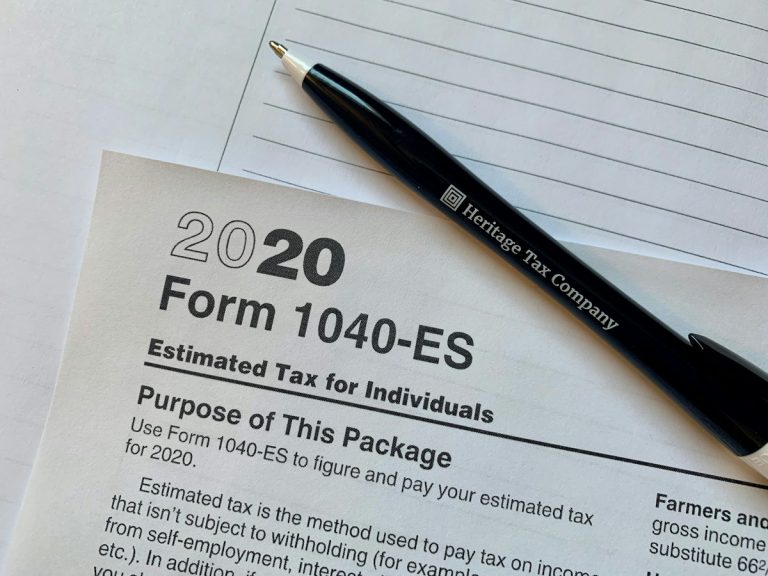
SEIS and EIS tax relief represents the UK government’s statutory incentive to encourage private investment into high-risk, early-stage enterprises. Under the Seed Enterprise Investment Scheme (SEIS), eligible investors claim up to 50% upfront income tax relief alongside loss relief and complete capital gains exemptions. Under the Enterprise Investment Scheme (EIS), investors receive 30% upfront income tax relief, inheritance tax relief, and capital gains deferral on investments up to £1 million per tax year, or up to £2 million for Knowledge Intensive Companies.
Investing in early-stage UK companies has traditionally carried substantial commercial risk, but these statutory reliefs significantly cushion potential losses while leaving growth uncapped. By pairing upfront tax reductions with capital gains write-offs, you turn early-stage backing into a structured, highly tax-efficient portfolio strategy. Platforms such as Oriel IPO help connect individual investors directly with vetted enterprises, giving you access to transparent opportunities with zero commission fees.
Unlocking Smart Tax Breaks: Your Essential Guide to SEIS and EIS Tax Relief
Backing early-stage founders is thrilling, but nobody enjoys risking hard-earned capital without a safety net. The UK government recognised this issue decades ago when creating SEIS and EIS tax relief schemes. Instead of letting startup failure rates frighten off angel investors, the Treasury decided to co-fund your downside risk. If a startup wins, your upside is sheltered from taxes; if it stumbles, your net financial pain is slashed down to a small fraction of your original cheque.
Navigating these tax schemes does not require a finance doctorate, but it does require knowing the statutory boundaries. Whether you want to explore direct early-stage equity or you are hunting for strategic Tax saving investments, getting the mechanics right is everything. Let us break down how each scheme functions, compare their limits, unpack loss relief arithmetic, and show you step by step how to claim your relief without drowning in HMRC paperwork.
What is the Seed Enterprise Investment Scheme (SEIS)?
The Seed Enterprise Investment Scheme arrived in 2012 to help nascent companies secure their very first rounds of equity capital. Because seed-stage companies carry high operational risks, SEIS provides the most generous tax incentives available to UK taxpayers.
Under current rules updated by HM Treasury, individual investors can commit up to £200,000 per tax year into SEIS-qualifying companies. In exchange, the scheme delivers multiple layers of tax efficiency:
- 50% Upfront Income Tax Relief: You offset half of your total investment directly against your income tax bill for the current tax year, or carry it back to the preceding tax year.
- Capital Gains Reinvestment Relief: If you realise a capital gain by selling another asset (such as shares, commercial property, or cryptocurrency) and reinvest those profits into SEIS shares, you permanently exempt 50% of the original gain from Capital Gains Tax (CGT).
- Exemption from CGT on Profits: When you hold your qualifying SEIS shares for at least three continuous years, any profit you make upon exit is 100% free of Capital Gains Tax.
- Loss Relief on Downside: If the company unfortunately shuts down, you can claim loss relief against your income tax or capital gains, cutting your maximum net loss dramatically.
If you are keen to examine early opportunities under this scheme, you can Explore SEIS opportunities to see how early-stage ventures structure their seed offerings.
What is the Enterprise Investment Scheme (EIS)?
While SEIS focuses on seed rounds, the Enterprise Investment Scheme caters to businesses that are slightly further along their growth trajectory. EIS launched back in 1994 and has supported tens of thousands of growing businesses across the United Kingdom.
Because EIS companies are generally more established, the upfront tax relief is set at 30% rather than 50%. However, the annual allowances are significantly higher:
- 30% Upfront Income Tax Relief: You can invest up to £1,000,000 per tax year (or up to £2,000,000 if investing in Knowledge Intensive Companies) and deduct 30% of that total straight from your personal income tax liability.
- CGT Deferral Relief: If you have incurred a capital gain elsewhere, you can defer paying tax on that gain indefinitely by reinvesting the proceeds into EIS-eligible shares within a specified time window (one year before or up to three years after the disposal).
- 100% Tax-Free Capital Gains: Hold your EIS shares for at least three years, and any profit realised upon sale is completely exempt from CGT.
- Inheritance Tax (IHT) Exemption: After holding your EIS shares for two continuous years, they typically qualify for Business Property Relief (BPR). This means they can be passed on to beneficiaries completely free of UK Inheritance Tax.
To discover how growth-stage businesses utilise this framework, you can Understand EIS tax relief and review how scaling enterprises allocate larger rounds of capital.
Side-by-Side Comparison: SEIS vs EIS
Deciding whether to allocate capital toward seed-stage ventures or more mature businesses depends on your risk tolerance, your current tax obligations, and your long-term goals. Here is how the two schemes stack up against each other across core parameters:
| Feature | Seed Enterprise Investment Scheme (SEIS) | Enterprise Investment Scheme (EIS) |
|---|---|---|
| Maximum Annual Investor Limit | £200,000 | £1,000,000 (up to £2,000,000 for KICs) |
| Upfront Income Tax Relief | 50% of amount invested | 30% of amount invested |
| Carry-Back Facility | Yes (to previous tax year) | Yes (to previous tax year) |
| Minimum Holding Period | 3 years | 3 years |
| CGT Treatment on Exit | 100% tax-free profit | 100% tax-free profit |
| Treatment of Reinvested Gains | 50% permanent CGT exemption | 100% CGT deferral |
| Inheritance Tax Exemption | Qualifying shares after 2 years (BPR) | Qualifying shares after 2 years (BPR) |
| Company Age Requirement | Trading under 3 years | Trading under 7 years (10 for KICs) |
| Company Gross Asset Limit | £350,000 prior to investment | £15,000,000 prior to investment |
| Maximum Full-Time Staff | Fewer than 25 employees | Fewer than 250 (500 for KICs) |
| Company Lifetime Raise Cap | £250,000 | £12,000,000 (£20m for KICs) |
Both schemes work brilliantly together. Many experienced angels build balanced portfolios consisting of early seed allocations alongside scaling EIS investments.
The True Mathematics of Loss Relief: Capping Your Downside
One common misconception among prospective angels is the idea that early-stage investing means putting 100% of your cash on the line. When you use SEIS and EIS tax relief, that fear is mathematically unfounded.
Loss relief allows you to offset your net loss (the total investment minus your initial upfront tax relief) against your personal income tax bill in the year of failure, or against capital gains. For higher-rate and additional-rate taxpayers, this safety cushion changes the whole equation.
The Numbers Under SEIS (45% Additional Rate Taxpayer)
Imagine you back a seed-stage venture with £10,000 via SEIS:
- Initial cash invested: £10,000
- Upfront Income Tax Relief claimed (50%): -£5,000
- Effective capital at risk: £5,000
Now, let us assume the worst-case scenario occurs: the startup fails completely, returning £0.
- Net loss for relief calculation: £5,000
- Income Tax Loss Relief at 45% (45% of £5,000): -£2,250
- Total capital returned via tax reductions: £7,250 (£5,000 upfront + £2,250 loss relief)
- Your actual net out-of-pocket loss: Just £2,750
Your maximum downside risk is capped at 27.5% of the total investment! If you were paying the 40% higher rate of tax, your total downside risk would still be capped at only 30%.
The Numbers Under EIS (45% Additional Rate Taxpayer)
Let us run the same calculation on a £10,000 allocation under EIS:
- Initial cash invested: £10,000
- Upfront Income Tax Relief claimed (30%): -£3,000
- Effective capital at risk: £7,000
Assuming the business collapses:
- Net loss for relief calculation: £7,000
- Income Tax Loss Relief at 45% (45% of £7,000): -£3,150
- Total capital returned via tax reductions: £6,150 (£3,000 upfront + £3,150 loss relief)
- Your actual net out-of-pocket loss: £3,850
Under EIS, an additional-rate taxpayer risks only 38.5% of their committed capital. This creates an asymmetric payoff profile: if your investment performs well, you keep 100% of the upside without paying capital gains tax; if it fails, the government absorbs the bulk of your loss.
What Makes a Company Eligible for SEIS and EIS?
To ensure your investment remains tax-deductible, the startup must adhere to strict HMRC criteria. If a business falls out of compliance during your three-year holding window, HMRC can claw back your tax relief. That is why smart angels check the eligibility rules thoroughly before committing funds.
The Permanent Establishment Rule
The business must maintain a genuine, permanent presence or office in the United Kingdom. While it can serve overseas markets, its primary corporate presence and commercial foundation must sit within the UK.
The Qualifying Trade Requirement
The majority of standard commercial activities qualify. However, HMRC strictly excludes certain sectors that it deems speculative, asset-backed, or low-risk. Excluded trades include:
- Property development, landlord activities, and real estate leasing
- Banking, insurance, moneylending, and financial services
- Legal and accountancy services
- Farming, market gardening, and forestry
- Operating hotels, guest houses, and nursing homes
- Generation of electricity, heat, or energy through subsidised schemes
- Dealing in commodities, shares, futures, or other financial instruments
Gross Assets and Headcount Boundaries
For SEIS, a business cannot hold gross assets exceeding £350,000 immediately before the share issue, and it must employ fewer than 25 full-time equivalent staff members. For EIS, the gross asset ceiling rises to £15 million immediately before the investment (and £16 million immediately following it), with a staff ceiling of fewer than 250 full-time equivalent employees (or 500 for Knowledge Intensive businesses).
The Risk-to-Capital Condition
HMRC mandates that every qualifying company must satisfy the Risk-to-Capital condition. This test looks at two elements: the company must intend to grow and develop its trade in the long run, and there must be a genuine commercial risk that the investor could lose more capital than they gain.
If you are an entrepreneur looking to structure your round to meet these terms, you can Raise startup investment and ensure your company satisfies statutory investor requirements.
How Can Founders Secure Advance Assurance?
Before angel investors wire a single pound, they will usually ask for an HMRC Advance Assurance letter. This document is a formal provisional confirmation from HM Revenue and Customs stating that the startup qualifies for SEIS or EIS based on its current plans.
Securing Advance Assurance involves submitting a detailed dossier to HMRC’s Small Companies Enterprise Centre (SCEC). The submission pack must include:
- The company’s business plan and commercial forecasts
- Up-to-date accounts and articles of association
- Details of how the funds will be deployed to support commercial growth
- Evidence that the business satisfies the Risk-to-Capital condition
- A named list of prospective investors who intend to back the round
Accountants and tax specialists play an invaluable role here. If you manage corporate clients preparing for a raise, you can tap into SEIS EIS support for accountants to simplify the compliance process and build airtight assurance filings.
How to Claim Your SEIS and EIS Relief: Step by Step
You have evaluated the startup, wired your capital, and received your share certificate. How do you actually get your tax reduction? The process involves four defined stages:
Step 1: The Company Operates for the Required Period
The business must trade for at least four months, or spend at least 70% of the capital raised under SEIS, before it can apply to HMRC for your tax certificates. For EIS, the company must also trade for at least four months.
Step 2: The Business Files Form SEIS1 or EIS1
Once the qualification period passes, the company submits a compliance statement (Form SEIS1 or Form EIS1) to HMRC. This statement certifies that the company has adhered to all statutory rules since the share issuance.
Step 3: Receipt of SEIS3 or EIS3 Certificates
After reviewing the compliance statement, HMRC approves the filing and issues blank SEIS3 or EIS3 certificates to the business. The company completes each certificate with individual investor details and distributes them to you.
Step 4: Submitting via Self-Assessment
Once you receive your physical or digital SEIS3 or EIS3 certificate, you can claim your relief in one of two ways:
- Your Annual Self-Assessment Tax Return: Fill in the Additional Information pages (specifically the tax reliefs sections), citing the company name, investment date, amount subscribed, and HMRC reference number from your certificate.
- PAYE Coding Notice Adjustment: If you are employed under PAYE and do not want to wait until the end of the tax year, you can submit your certificate directly to HMRC with a request to adjust your current tax code. This reduces the monthly income tax deducted from your payslip right away.
Common Pitfalls That Can Disqualify Your Tax Relief
Tax relief is generous, but HMRC is vigilant. Minor oversights can lead to a complete cancellation or clawback of your tax benefits. Keep these essential boundaries in mind:
- The 30% Connected Persons Rule: You cannot hold more than 30% of the company’s share capital, voting rights, or loan capital. This test also includes shares held by your spouse, civil partner, parents, grandparents, children, or grandchildren.
- Employment Restrictions: Under SEIS, an investor cannot be a paid employee of the company, although acting as a director (paid or unpaid) is generally permissible. Under EIS, investors generally cannot be employees or paid directors, unless they qualify under the specific Business Angel exceptions (where they become a director after making the investment or receive reasonable director remuneration).
- Value Received Rules: If the startup provides you with unusual perks, discounts, or returns value to you during the compliance period, HMRC may treat this as returned capital and reduce or cancel your relief.
- The Strict Three-Year Holding Rule: If you dispose of your shares, gift them, or exit within three years from the date of issue (or three years from the date the company started trading, if later), your upfront income tax relief will be clawed back.
Cutting Out the Middleman: Investing Without Syndicate Fees
Historically, participating in SEIS and EIS rounds meant joining private angel syndicates or using crowdfunding portals that levied hefty upfront fees, ongoing management charges, and carry percentages of 10% to 20%. Worse, platforms often took a 5% to 7% cut directly from the founder’s raise, immediately diluting the runway of the business you just backed.
Modern investors and founders prefer direct, transparent engagement. Through the Oriel Investment Marketplace, founders showcase their companies directly to private investors and business angels without paying transaction commissions or success cuts. Startups keep every penny they raise to build their products, hire talent, and accelerate growth.
By taking advantage of dedicated Educational Tools, investors can review tax reliefs, test scenarios with calculators, and evaluate opportunities with complete clarity. If you are an angel wanting to deploy capital efficiently, you can Discover startup opportunities and evaluate deals on your own terms.
Frequently Asked Questions
Can I claim SEIS or EIS relief if I do not pay enough UK Income Tax?
No. You can only claim income tax relief up to the total amount of UK income tax you actually owe for the relevant tax year. If your annual income tax liability is £6,000 and you invest £20,000 under SEIS (which generates £10,000 in nominal relief), your tax bill will be reduced to zero, but HMRC will not refund the remaining £4,000 in cash. However, you can use the statutory carry-back facility to apply unused relief to the previous tax year, provided you had sufficient tax liabilities then.
What is the carry-back facility and how does it work?
The carry-back facility lets you treat all or part of an investment made in the current tax year as if it were made in the immediately preceding tax year. For example, if you make a £50,000 EIS investment in November 2024 (the 2024/25 tax year), you can elect to carry that relief back to the 2023/24 tax year, helping you reduce or reclaim tax paid in that prior period.
Are dividends paid by SEIS and EIS companies tax-free?
No. While any capital gains made on the sale of qualifying shares held for at least three years are 100% exempt from Capital Gains Tax, any dividends paid out by the business remain fully taxable according to your normal UK dividend tax rate.
How long does it usually take to receive an SEIS3 or EIS3 certificate?
It typically takes between 4 to 8 months from the date shares are issued. The company must complete its statutory four-month trading period before submitting its compliance statement to HMRC. Once submitted, HMRC usually takes between 4 to 12 weeks to process the forms and issue the certificates.
Can foreign nationals living in the UK claim SEIS and EIS reliefs?
Yes, provided you pay UK Income Tax. The relief is tied to your UK personal tax liability rather than your nationality or citizenship. Non-residents who pay UK tax on UK income can also utilise the relief against those specific liabilities.
Final Thoughts: Building a Resilient Angel Strategy
Backing early-stage ventures remains one of the most effective ways to support British innovation while generating meaningful personal wealth. But running in blind is a recipe for disappointment. The smart route combines sensible commercial vetting, proper portfolio diversification across multiple startups, and the strategic use of SEIS and EIS tax relief to lock in tax-efficient downside protection.
Ready to get involved? Review our transparent subscription packages, take a look at our Oriel IPO membership plans, and when you are ready to explore curated, commission-free early-stage investments, Start using Oriel IPO today.